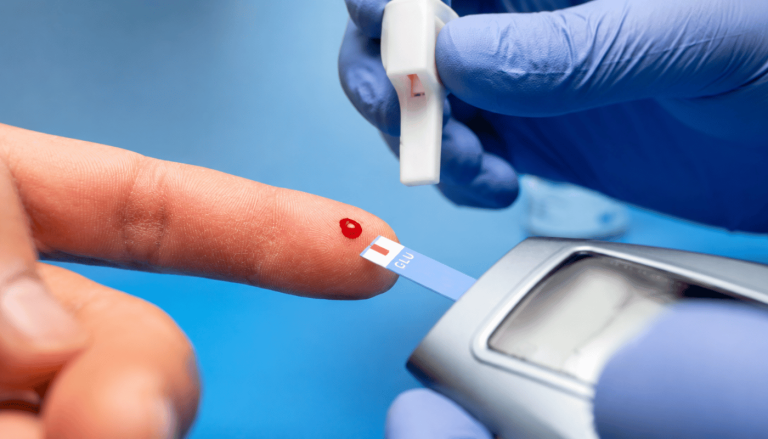
The World Health Organization describes iron deficiency as “the most common nutritional deficiency leading to anaemia,” and the scale is substantial: an estimated 500 million women aged 15 to 49 and 269 million children aged 6 to 59 months live with anemia worldwide, a large share of it traceable to inadequate iron. [1]
Yet in most consumer-facing guidance, including a good deal of supplement marketing, iron deficiency and iron deficiency anemia are used as though they were interchangeable. They are not the same diagnosis, and the distinction has real, practical consequences for anyone making decisions about screening, food choices, or supplementation. This guide sets out the current picture: how iron deficiency actually progresses, who is genuinely at elevated risk, what recent research has changed about how iron supplements should be dosed, and where newer, pricier oral iron formulations do and do not earn their premium.
IRON DEFICIENCY, BY THE NUMBERS
- 500 million women aged 15-49, and 269 million children aged 6-59 months, currently live with anemia worldwide [1]
- Iron deficiency causes roughly half of the world’s approximately 1.62 billion anemia cases [2]
- Up to 60% of people with chronic heart failure, and a similar share of colon cancer patients at diagnosis, have measurable iron deficiency [2]
- 25% to 35% of frequent blood donors develop iron deficiency over time [2]
Why “Iron Deficiency” and “Anemia” Aren’t the Same Thing
Iron deficiency develops in stages, not as a single event. The body first draws down its stored iron, reflected in a falling serum ferritin level, while hemoglobin and red blood cell production remain normal; at this stage, most people have no symptoms at all. [3] As stores continue to fall, red blood cell production starts to suffer even though hemoglobin has not yet dropped below a diagnostic threshold, a state clinicians call iron-deficient erythropoiesis, or non-anemic iron deficiency. This is where many of the specific symptoms associated with low iron actually appear: fatigue, restless leg syndrome, cognitive fog and difficulty concentrating, and pica, unusual cravings to eat non-food substances such as ice or starch. [3] Only in the third stage, once hemoglobin synthesis is meaningfully impaired, does the condition become iron deficiency anemia, generally defined as hemoglobin below 13 g/dL in men and below 12 g/dL in non-pregnant women and children over 10 (below 11 g/dL in younger children). [2,3] More specific physical findings, spoon-shaped nails (koilonychia), glossitis, and angular cheilitis, tend to appear only with chronic or severe deficiency. [3]
The clinical significance of this staging is straightforward: a normal hemoglobin result does not rule out iron deficiency, and it does not rule out the symptoms that come with it. Ferritin below 30 ng/mL is generally accepted as indicating depleted iron stores, and gastroenterology guidance has used a threshold below 45 ng/mL to diagnose iron deficiency more broadly, though ferritin can be falsely elevated by inflammation, which complicates interpretation in people with chronic illness. [2,3] A prevention or screening approach built only around hemoglobin will systematically miss a meaningful share of people who are iron deficient but not yet anemic.
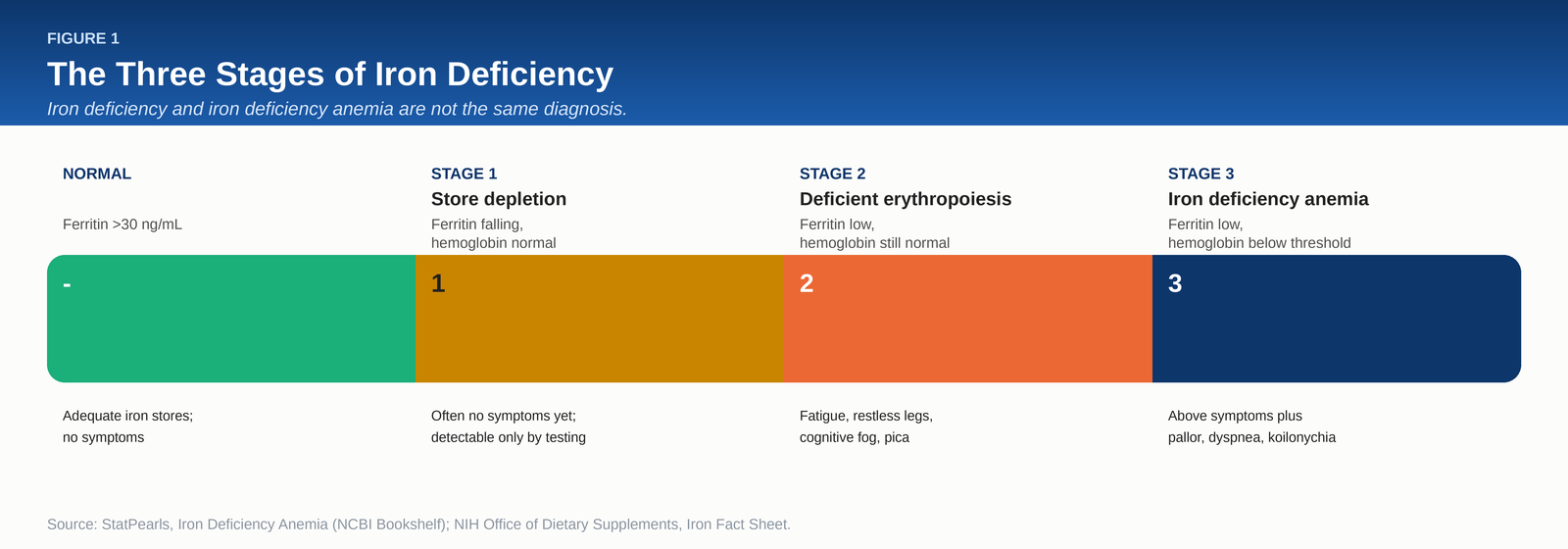
Figure 1. Symptoms tied to low iron, fatigue, restless legs, cognitive fog, can appear well before a standard blood count flags anemia.
Who’s Most at Risk
Iron deficiency risk is not evenly distributed. It concentrates heavily in a handful of physiological and clinical situations, most of which involve either increased iron loss, increased iron demand, or reduced absorption.
Heavy menstrual bleeding accounts for an estimated 33% to 41% of iron deficiency anemia cases in women of reproductive age, and at least 10% of menstruating women are affected. [2] Pregnancy roughly doubles iron requirements, with documented deficiency prevalence rising sharply across trimesters, from 6.9% in the first trimester to 29.7% by the third, as the growing fetus and expanding blood volume draw on maternal stores. [2] Demand also outpaces supply in infancy: an estimated 18% of infants aged 6 to 12 months take in inadequate iron, a period when the stores accumulated before birth are being depleted rapidly by growth. [2] On the loss side, 25% to 35% of frequent blood donors become iron deficient over time, and chronic gastrointestinal blood loss, from conditions including colon cancer (iron deficiency at diagnosis in up to 60% of patients), celiac disease, and inflammatory bowel disease, is a major and sometimes under-recognized cause in adults who are not otherwise at obvious risk. [2] Heart failure is a less intuitive entry on this list: roughly 60% of people with chronic heart failure have iron deficiency, driven partly by inflammation-related changes in how the body regulates iron rather than by blood loss alone. [2]
Two further groups are worth flagging specifically for a nutrition and distribution audience. Vegetarians and vegans need meaningfully more dietary iron than people who eat animal products, since non-heme iron from plant sources is absorbed at roughly a third to a half the rate of iron from a mixed diet. [2] And athletes, particularly female and endurance athletes, show elevated rates of iron deficiency, reported at 15% to 35% in female athletes and 3% to 11% in male athletes, compared with roughly 5% in the general population, driven by a combination of foot-strike hemolysis, gastrointestinal and sweat losses, and an exercise-induced spike in hepcidin that temporarily blunts iron absorption for several hours after training. [6]
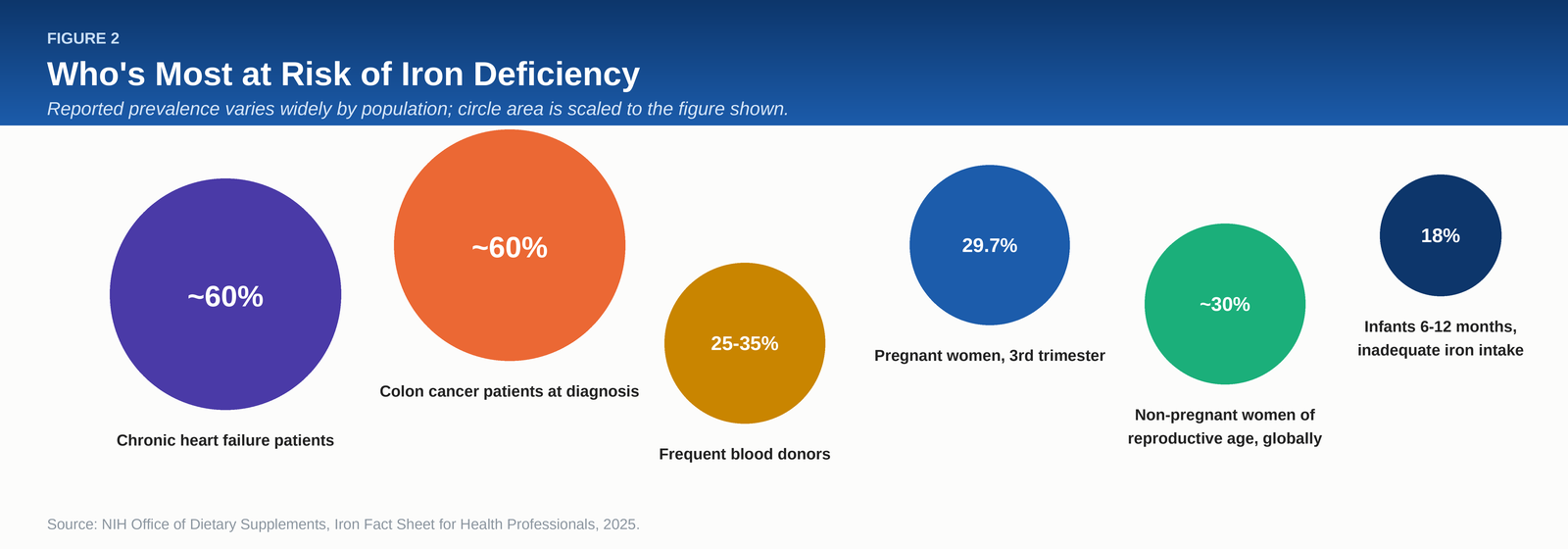
Figure 2. Reported prevalence by risk group varies widely; several groups face iron deficiency rates several times higher than the general population.
Getting Enough Iron From Food
Dietary iron comes in two forms with meaningfully different absorption profiles. Heme iron, from meat, poultry, and seafood, makes up only 10% to 15% of typical intake but is absorbed efficiently regardless of what else is eaten. Non-heme iron, from plants and fortified foods, makes up the majority of most people’s intake but is far more sensitive to what accompanies it: absorption from a mixed diet with meat and vitamin C runs 14% to 18%, compared with 5% to 12% on a vegetarian diet. [2]
Food source | Type | Approx. iron per serving |
Fortified breakfast cereal | Non-heme (fortified) | Up to 18 mg per serving |
Oysters | Heme | 5-8 mg per 3 oz |
Beef liver | Heme | 5-8 mg per 3 oz |
White beans | Non-heme | 5-8 mg per cup |
Lentils, cooked | Non-heme | ~3 mg per 1/2 cup |
Spinach, cooked | Non-heme | ~3 mg per 1/2 cup |
Tofu | Non-heme | ~3 mg per 1/2 cup |
Lean red meat, poultry | Heme | Moderate amount, high bioavailability |
Source: NIH Office of Dietary Supplements, Iron Fact Sheet for Health Professionals.
What’s eaten alongside iron matters almost as much as the food itself. Vitamin C-rich foods and meat both enhance non-heme iron absorption, while phytates, polyphenols and tannins, and calcium can inhibit it. [2]
Tends to enhance absorption | Tends to inhibit absorption |
Vitamin C-rich foods (citrus, peppers, tomatoes) eaten with the meal | Phytates in whole grains and legumes |
Meat, poultry, or fish eaten in the same meal (the “meat factor”) | Polyphenols and tannins in tea, coffee, and some herbal infusions |
| Calcium from dairy or supplements taken at the same time |
In practice, these effects are modest and are largely offset by a varied, typical diet. [2] The exception is for people already at elevated risk, where separating iron-rich meals or supplements from tea, coffee, or calcium by an hour or two is a reasonable, low-cost precaution rather than a strict rule for everyone.
Why How You Take Iron May Matter as Much as How Much
One of the more clinically useful findings in recent years concerns not what form of iron to take, but how often. A 2020 crossover trial in iron-deficient anemic women found that oral iron supplements trigger a spike in hepcidin, the hormone that regulates iron absorption, lasting roughly 24 hours after a dose. [4] Because of this, fractional iron absorption was 40% to 50% higher on days when a dose followed a gap of 48 hours than on consecutive daily doses, with no evidence of a lasting mucosal block effect between doses. [4]
The practical implication: dosing every other day rather than every day, at roughly double the per-dose amount to deliver the same weekly total, can improve how much iron is actually absorbed while potentially reducing the total gastrointestinal exposure that drives side effects. [4,5] This is a meaningful update to the older, still-common assumption that a daily dose is automatically the most effective approach, and it is worth raising directly with anyone struggling to tolerate a standard daily regimen.
New Iron Formulations: Worth the Premium?
Standard ferrous sulfate remains the first-line oral iron supplement largely on cost and track record, but it carries a real tolerability cost: a 2024 review found it roughly doubles the odds of gastrointestinal side effects compared with placebo. [5] Newer formulations, including ferric maltol, sucrosomial iron (ferric pyrophosphate encapsulated in phospholipids), and several polysaccharide and protein-bound complexes, are generally better tolerated; in one inflammatory bowel disease cohort, 96.6% of patients completed 12 weeks of sucrosomial iron with only mild side effects in 17%. [5]
What they have not shown is superior efficacy. The same review concludes plainly that despite better tolerability, these newer options “have not proven to be superior to conventional ferrous salts and are considerably more costly,” and that no oral iron formulation, old or new, has demonstrated non-inferiority to intravenous iron. [5] The honest positioning for a newer formulation is a better-tolerated option for people who cannot manage standard ferrous salts, rather than a universal upgrade that outperforms them.
Supplementation: Forms, Dosing, and Safety
Oral iron supplements vary in how much elemental iron they actually deliver: ferrous fumarate is about 33% elemental iron, ferrous sulfate about 20%, and ferrous gluconate about 12%. [2] Multivitamin and mineral products typically supply around 18 mg of iron, while dedicated iron supplements often contain 65 mg. Doses of 45 mg per day or more are the point at which gastrointestinal side effects, nausea, constipation, and abdominal discomfort, become meaningfully more common; taking iron with food can reduce these effects, though it also somewhat reduces absorption, a trade-off worth discussing rather than assuming. [2]
The tolerable upper intake level for adults is 45 mg per day from supplements, though physicians do sometimes prescribe higher therapeutic doses for confirmed iron deficiency anemia under supervision. [2] Accidental overdose is a genuine hazard, particularly in young children: acute intakes above roughly 20 mg per kilogram of body weight can cause corrosive intestinal injury, and doses above 60 mg per kilogram have caused multisystem organ failure and death. Iron supplements sold in the U.S. are required to carry a label warning that accidental overdose is a leading cause of fatal poisoning in children under 6, and supplements should always be stored well out of a child’s reach. [2]
A handful of drug interactions are worth flagging to anyone advising on iron supplementation:
- Levodopa (used for Parkinson’s disease and restless leg syndrome): iron can chelate and reduce its absorption, diminishing effectiveness. [2]
- Levothyroxine (for hypothyroidism): taking it within 4 hours of an iron supplement can meaningfully reduce its efficacy. [2]
- Proton pump inhibitors (e.g., omeprazole, lansoprazole): reduced stomach acid impairs iron absorption, and people on long-term PPI therapy often respond poorly to standard iron supplementation. [2]
- Calcium supplements can interfere with iron absorption when taken at the same time; spacing them apart is the standard recommendation. [2]
CASE IN POINT: Not Everyone Needs More Iron
Hereditary hemochromatosis, a genetic condition causing excessive iron absorption, is a direct counterpoint to this entire guide. An estimated 1 in 10 people of White European descent carry the most common HFE gene variant, though only about 4.4 per 1,000 are homozygous and at meaningful risk of iron overload. [2] Left untreated, affected individuals typically develop signs of iron toxicity by their thirties, including liver cirrhosis, liver cancer, and heart disease, and the standard advice for this group is the opposite of everything above: avoidance of iron and vitamin C supplements. [2] It is a useful reminder that “more iron” is never a universally safe default, and that unexplained fatigue or joint pain warrants proper testing rather than assumption in either direction.
What Prevention Looks Like, by Risk Group
Risk group | What tends to help |
Menstruating women, especially heavy periods | Track cycle-related fatigue; ask about a ferritin check if periods are heavy or prolonged |
Pregnant women | Follow prenatal iron guidance; take separately from calcium supplements |
Vegetarians and vegans | Pair non-heme iron sources with vitamin C-rich foods at meals; expect higher intake targets |
Infants and toddlers | Iron needs rise sharply after 6 months as birth stores deplete; discuss timing of iron-rich complementary foods with a pediatrician |
Frequent blood donors | Consider spacing donations, or a supervised supplement course during high-frequency donation periods |
Athletes, especially female and endurance athletes | Periodic ferritin and hemoglobin screening; iron-rich meals timed away from intense training sessions |
People with chronic GI disease, cancer, or heart failure | Confirm iron status is checked as part of routine disease management, not assumed either way |
Formulating Iron Nutrition That Matches the Evidence
Mevian sources and formulates iron-containing nutraceutical and FSMP products for distributors, wholesalers, and pharmacy partners, calibrated to where the evidence actually stands: well-absorbed standard forms for most use cases, and better-tolerated alternatives positioned honestly for the patients who genuinely benefit from them, rather than marketed as a universal upgrade.
If you are building or refining an iron or broader nutrition portfolio, we welcome a conversation about formulation choice, dosing strategy, and regulatory-aligned positioning.