EPILEPSY CARE: THEN AND NOW
A generation ago | Today |
Diagnosis relied almost entirely on describing what a seizure looked like, plus a standard EEG and MRI. A handful of broad-spectrum medications were the only real treatment option. A drug-resistant diagnosis often meant few further options beyond open brain surgery. | Genetic testing, longer-term EEG monitoring, and wearable seizure-detection tools add precision to diagnosis. Newer, more targeted medications are added to the same core drug classes. Device-based therapy and minimally invasive procedures now sit between medication and open surgery. |
Epilepsy is one of the most common serious neurological conditions, and also one of the most misunderstood. It is not a single disease but a tendency toward recurrent, unprovoked seizures, disruptions in the brain’s normal electrical activity that can look and feel very different from one person to the next. It is not contagious, and for most people who receive an accurate diagnosis and appropriate treatment, it is a manageable, not a defining, part of life.
What Happens in the Brain During a Seizure
A seizure occurs when a burst of abnormal, synchronized electrical activity disrupts the brain’s normal signaling, briefly overwhelming the systems that keep that activity organized and contained. What a seizure looks like from the outside depends heavily on where in the brain that disruption starts and how far it spreads.
Seizures are broadly grouped as focal, starting in one network of one hemisphere, or generalized, involving both hemispheres from the outset, with further distinctions based on whether awareness is preserved and whether movement is involved. That classification framework, and how it applies specifically to children, is covered in detail in Mevian’s pediatric epilepsy guide; the same core framework applies across ages, though the relative frequency of different seizure and epilepsy types shifts considerably between childhood and later adulthood.
Who Develops Epilepsy, and When
Epilepsy affects an estimated 50 million people worldwide, making it one of the most common neurological diseases globally, with roughly 5 million new diagnoses added each year. Nearly 80% of people with epilepsy live in low- and middle-income countries, where an estimated three-quarters lack access to appropriate treatment, a treatment gap that has far more to do with health-system access than with the condition itself. With appropriate antiseizure medication, up to 70% of people with epilepsy could become seizure-free, and risk of premature death, while up to 3 times that of the general population, is concentrated heavily among preventable causes such as falls, drowning, and prolonged uncontrolled seizures.
A pattern that general epilepsy guides frequently underweight is how much of the condition’s burden sits at the older end of the age spectrum rather than in childhood. Annual incidence rises sharply with age, from roughly 85 new cases per 100,000 people annually at ages 65 to 69 to as high as 240 per 100,000 in adults over 80, and nearly a quarter of all new-onset epilepsy diagnoses now occur in older adults. The causes behind that late-life pattern differ substantially from childhood epilepsy:
- Cerebrovascular disease, chiefly stroke, is the single leading identifiable cause, accounting for an estimated 30% to 50% of new epilepsy diagnoses in older adults; the seizure risk in the first year after a stroke rises roughly twentyfold.
- Neurodegenerative disease, including Alzheimer’s disease, raises seizure risk substantially and accounts for an estimated 10% to 20% of cases.
- Brain tumors, primary or metastatic, account for an estimated 10% to 30% of late-onset cases.
- Head trauma, often from falls, accounts for an estimated 5% to 20%.
- No identifiable cause is found in an estimated one-third to one-half of geriatric epilepsy cases even after thorough workup, complicated further by the fact that cognitive impairment can make seizures harder for patients themselves to recognize and report.
How Epilepsy Is Diagnosed Today
A diagnostic workup still starts with the fundamentals: a detailed account of the events themselves, ideally from both the patient and a witness, a neurological examination, an EEG to look for abnormal electrical patterns between or during seizures, and MRI or CT imaging to identify structural causes such as scarring, malformations, or tumors. What has changed is the layer of precision now available on top of that foundation.
Genetic testing, once reserved almost exclusively for pediatric epilepsy, is now a genuine option for adults, particularly those with seizure onset in the first year of life, an intellectual disability, a family history of epilepsy, or epilepsy that has not responded to two or more appropriately chosen medications. Diagnostic yield in adults runs lower than the pediatric literature’s headline figures, roughly 11% overall in unselected adult cohorts, but rises considerably in specific groups: around 30% for those with seizure onset in infancy, 16% with co-occurring intellectual disability, and 14% among adults with drug-resistant epilepsy. Roughly 55% of genetic diagnoses in adults are clinically actionable, changing medication choice (for example, avoiding sodium-channel-blocking drugs when an SCN1A variant is found), opening access to targeted or repurposed therapies, or clarifying eligibility for clinical trials of emerging gene-directed treatments.
The Modern Epilepsy Treatment Ladder
For most people, treatment still begins with medication, but what happens when a first medication is not enough looks meaningfully different today than it did a decade ago. Care now escalates through a wider set of well-defined options before, and sometimes instead of, open surgery.
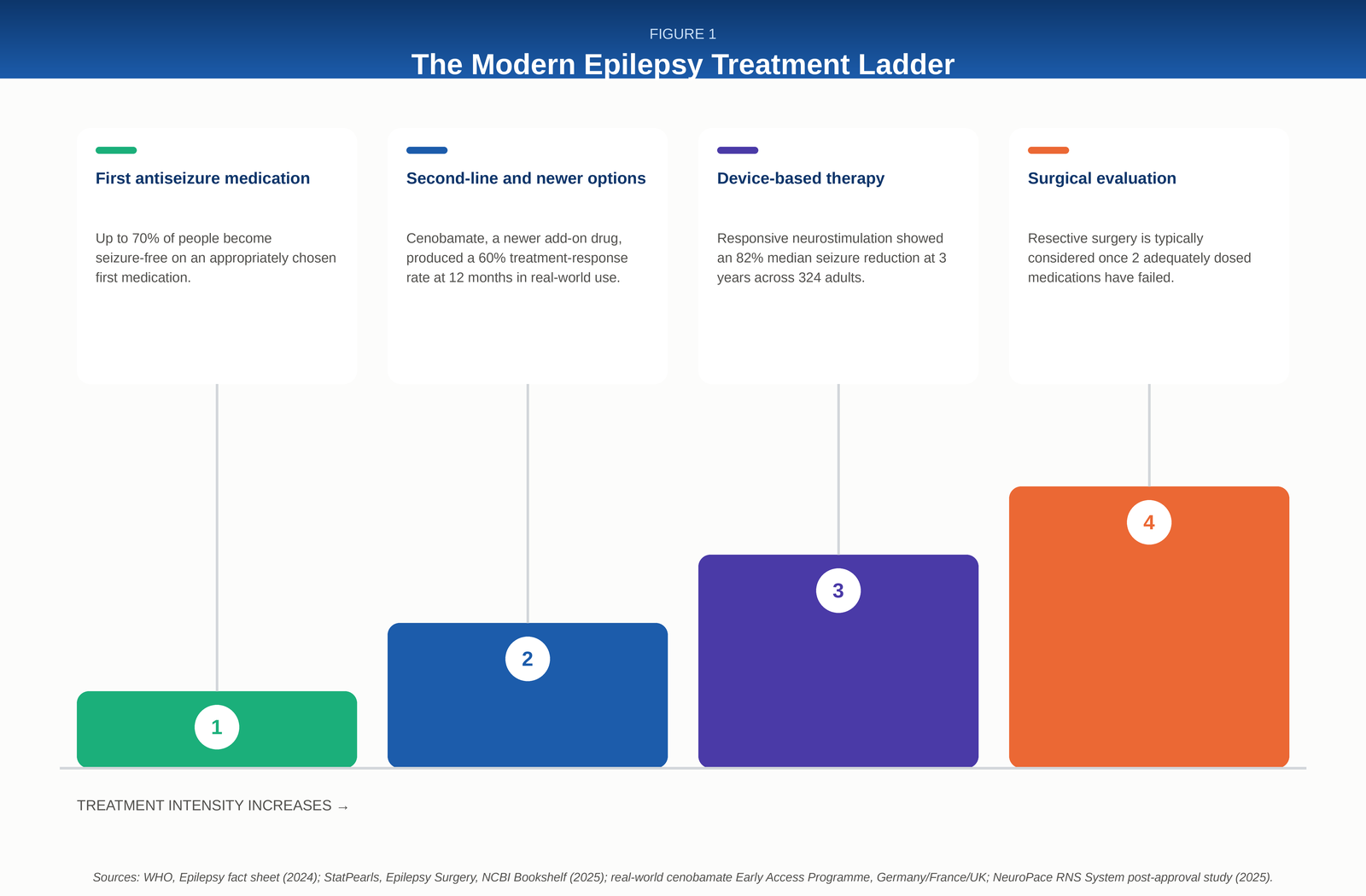
Figure 1. Treatment intensity escalates step by step, and a growing set of options now sits between a first medication and open surgery.
When Medication Alone Isn’t Enough: Devices and Surgery
Epilepsy is generally considered drug-resistant once seizures persist despite adequate trials of two appropriately chosen antiseizure medications, a threshold reached by an estimated 30% to 40% of people with epilepsy. For this group, three developments have materially expanded the options available.
Newer-generation medications continue to reach appropriately resistant patients even after multiple prior drug failures. In a real-world early access programme across Germany, France, and the United Kingdom, 298 adults with drug-resistant focal epilepsy, a group with a median epilepsy duration of 22 years and a median of 9 previously failed medications, were started on cenobamate. By 12 months of maintenance dosing, 60% had achieved at least a 50% seizure reduction and 45% were seizure-free, with a manageable tolerability profile: 30.9% experienced an adverse reaction, most commonly fatigue or dizziness, and serious reactions occurred in only 1.0% of patients, all during the initial titration period.
Responsive neurostimulation (RNS), an implanted device that detects abnormal electrical activity and delivers a corrective electrical pulse in real time, has shown outcomes that continue to improve well beyond the first year of use.
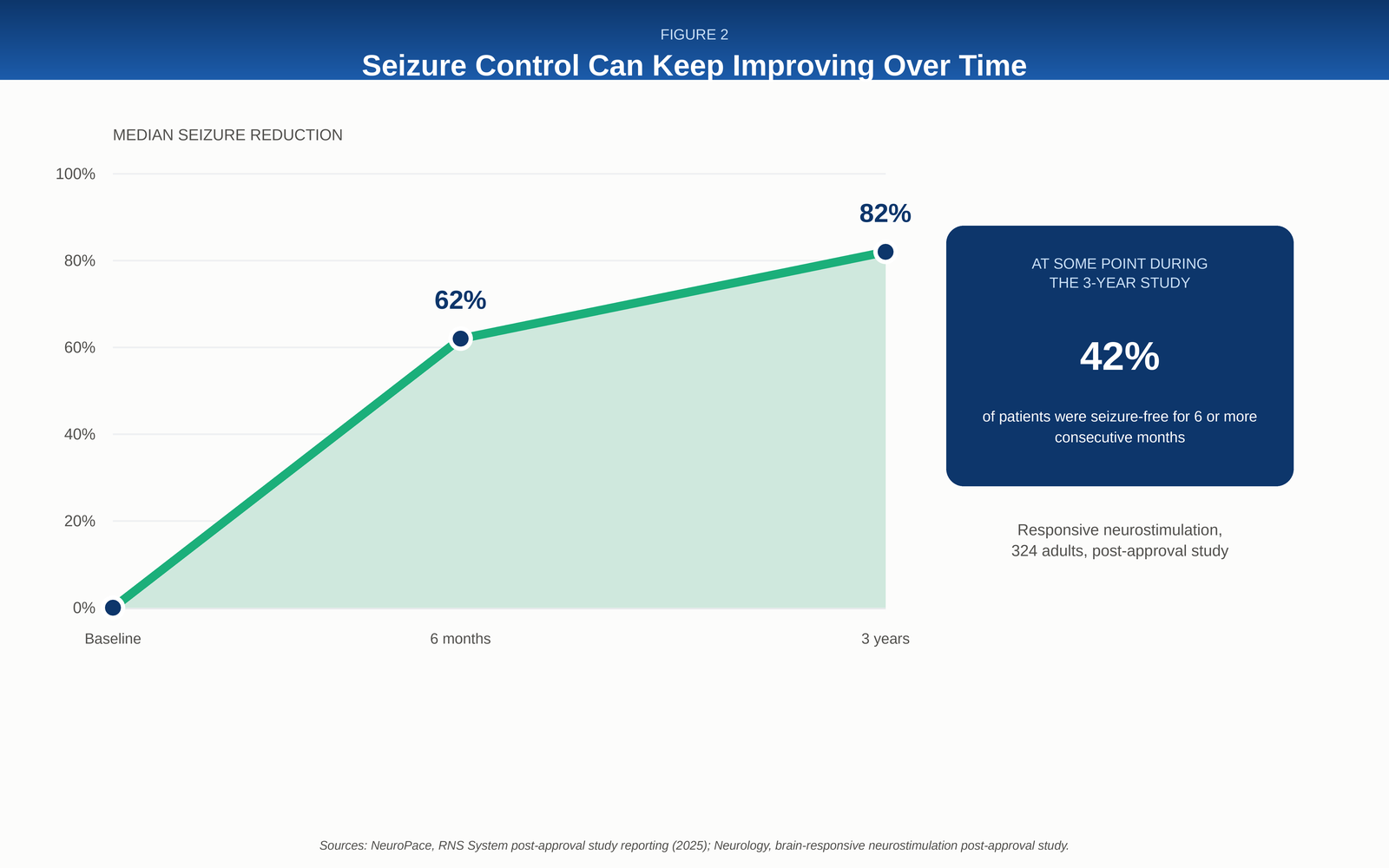
Figure 2. In a 324-adult post-approval study, seizure reduction with responsive neurostimulation continued to grow between the 6-month and 3-year follow-up points.
Laser interstitial thermal therapy (LITT) offers a minimally invasive alternative to open resection for select cases of temporal lobe epilepsy, guided by real-time MRI to precisely ablate a small seizure-generating area through a single small incision rather than open craniotomy. A meta-analysis pooling 836 patients found a 56% rate of seizure freedom (Engel class I) following LITT, honestly described by the same researchers as slightly inferior to published outcomes after open temporal lobectomy, alongside measurable risk of verbal and visual memory decline. LITT is best understood as a genuine additional option, particularly for patients who are poor candidates for open surgery or who prioritize a shorter, less invasive recovery, rather than a universal replacement for resective surgery.
Open resective surgery itself remains the intervention with the longest track record and, for well-selected candidates, the strongest outcomes: seizure freedom is achieved in up to 80% of appropriately selected cases according to current surgical literature, particularly when a clear, single seizure-generating area can be identified and safely removed.
Living With a Modern Diagnosis
For the large majority of people who reach an effective medication, device, or surgical combination, epilepsy becomes a managed condition rather than a limiting one. The elevated mortality risk associated with epilepsy is concentrated heavily among people whose seizures remain uncontrolled, which is itself an argument for timely re-evaluation, rather than indefinite acceptance, whenever a treatment plan stops working as well as it once did. Anyone whose seizure frequency or pattern changes, or who has not been reassessed against current diagnostic and treatment options in several years, has a reasonable case for revisiting that plan with a specialist.
Frequently Asked Questions
Does having one seizure mean a person has epilepsy?
Not necessarily. A single seizure can result from a temporary trigger such as fever, a metabolic imbalance, or alcohol withdrawal, and does not by itself meet the clinical definition of epilepsy, which generally requires two unprovoked seizures more than 24 hours apart, or one seizure alongside a high calculated risk of recurrence.
Can epilepsy be cured, or only controlled?
For most people, epilepsy is controlled rather than cured: appropriate medication brings a large majority to seizure freedom or substantial reduction. For a smaller group with a clearly identified, surgically accessible seizure focus, resective surgery can produce durable, long-term seizure freedom that functions much like a cure in practice, though it is not typically described that way in the clinical literature.
Is epilepsy surgery only an option for children?
No. While pediatric epilepsy surgery draws particular attention because early intervention can change a child’s developmental trajectory, resective surgery, laser ablation, and neurostimulation devices are all established options for adults with drug-resistant epilepsy, and adult referral for surgical evaluation remains underused relative to how many appropriate candidates it could help.
How is a newer drug like cenobamate different from older antiseizure medications?
It is generally added to, rather than used in place of, a person’s existing medication regimen for drug-resistant focal epilepsy, and requires a careful, gradual titration schedule to manage tolerability. Its real-world results in patients who had already failed a median of 9 other medications are notable precisely because that population is expected to respond poorly to any new option.
Supporting Modern Epilepsy Care, From First Prescription to Advanced Therapy
Mevian works with distributors, pharmacy partners, and healthcare professionals across the full epilepsy care pathway, not only the first line of treatment. That includes:
- Antiseizure medication portfolios, sourced and distributed with the regulatory and cold-chain rigor that specialty neurology products require.
- Clinical nutrition and FSMP formulation support for patients on nutritionally structured therapies, positioned with the same evidence-graded honesty applied throughout this overview.
- Distribution reach into markets where newer antiseizure medications, devices, and specialist referral pathways are still becoming established.