A QUESTION WORTH ASKING
Two capsules sit side by side on a lab bench. Both labels list 500 mg of the same botanical extract. Only one manufacturer can prove, using a certified reference material and a validated analytical method, that the number on the label matches what is actually inside the capsule. To a regulator, a distributor, or a pharmacy buyer deciding which supplier to trust, that is not a technicality. It is the entire foundation on which confidence in a supply chain is built. |
The European dietary supplements market was valued at an estimated USD 49.39 billion in 2025 and is projected to reach USD 97.76 billion by 2033, growing at a compound annual rate of roughly 9.0 percent [1]. Growth at that pace is being driven by an aging population, rising consumer interest in preventive health, and wholesalers and pharmacy groups expanding cross-border portfolios faster than ever. But scale brings its own risk. Ingredients are sourced from multiple countries, formulated in different facilities, and sold into national markets that interpret shared EU rules in subtly different ways.
Quality, in that environment, cannot be assumed. It has to be measured, and a measurement is only meaningful if there is an agreed point of reference against which a result can be judged accurate or inaccurate. That is precisely the role of a reference standard: a certified material of known, independently verified composition that a laboratory uses to calibrate its instruments and confirm that its test methods are producing correct results. Without one, a certificate of analysis is, at best, an educated guess.
3,500+ Reference standards maintained by the U.S. Pharmacopeia (USP) alone, spanning drug substances, food ingredients, dietary supplement components, and impurities used across the industry [2]. |
What Exactly Is a Reference Standard?
A reference standard, sometimes called a certified reference material, is a highly characterized substance whose identity, purity, and potency have been established under controlled conditions, with a documented degree of certainty around every value on its certificate. Laboratories rely on it for two distinct purposes. First, to calibrate analytical instruments, confirming that a machine is reading concentration, mass, or absorbance correctly. Second, to validate a test method itself before that method is ever used to release a commercial batch. Skip either step and a laboratory can produce numbers that look precise but are not actually accurate.
Three organizations maintain the reference materials most relevant to the supplement industry, and each plays a different role in a distributor’s due-diligence process.
- USP (United States Pharmacopeia) curates more than 3,500 reference standards covering drug substances, excipients, food ingredients, impurities, degradation products, dietary supplement components, and instrument calibrators [2].
- EDQM (European Directorate for the Quality of Medicines & HealthCare) the custodian of the European Pharmacopoeia, releases new reference standards and replacement batches on a rolling monthly basis, for example ten new standards and twenty-one replacement batches in a single month in mid-2026, to keep pace with new and revised monographs [3].
- NIST (U.S. National Institute of Standards and Technology) developed the first dietary-supplement-specific Standard Reference Materials in partnership with the NIH Office of Dietary Supplements and the FDA, growing the catalogue from a single material released in 2006 to 28 by 2010, and expanding it steadily since as new ingredient categories emerge [4].
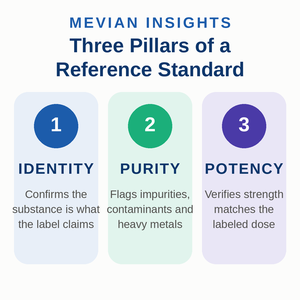
Figure 1. The three properties every reference standard is built to verify.
How Reference Standards Are Actually Used in the Lab
Analysts most often reach for high-performance liquid chromatography (HPLC), mass spectrometry (MS), or gas chromatography (GC) to compare a sample against its reference standard. These techniques measure the concentration of active ingredients contributing to a product’s intended effect, quantify excipients and fillers that affect stability and dosing accuracy, and screen for contaminants including heavy metals such as lead, arsenic, cadmium, and mercury, along with microbial contaminants, pesticide residues, and, in some documented cases, undeclared pharmaceutical adulterants.
A result is only as trustworthy as the laboratory that produced it, which is why accreditation has become a practical filter for B2B buyers. ISO/IEC 17025 is the international standard demonstrating that a testing laboratory has been independently assessed and verified, by a national accreditation body, to produce reliable and valid results rather than simply asserting that it does [5]. Within the EU, each member state operates one national accreditation body, DAkkS in Germany and COFRAC in France among them, and their accreditations are mutually recognized across the bloc under Regulation (EC) No 765/2008. In practice, a single national accreditation can satisfy regulatory expectations in every EU market a distributor sells into, which matters considerably for a business moving products across borders [5]. AOAC International supplements this framework with accreditation guidelines and officially validated test methods specifically for food, dietary supplement, pharmaceutical, and cannabis laboratories, giving analysts a documented, peer-reviewed method to pair with a certified reference material [6].
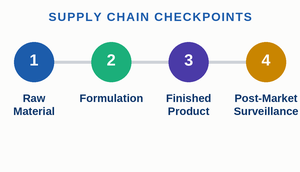
Figure 2. Reference standards are not a one-time check; they apply at every stage a product passes through.
Reference Standards and Regulatory Compliance: A Tale of Two Systems
The United States and the European Union take structurally different approaches to dietary supplement oversight, and understanding both is essential for any business trading across the Atlantic.
The FDA does not pre-approve dietary supplements before they reach the market. Instead, it requires manufacturers to comply with Current Good Manufacturing Practice regulations under 21 CFR Part 111, which obligate a company to “establish specifications to evaluate the identity, purity, strength, and composition” of its ingredients and finished products and to set defensible limits on contaminants, using scientifically valid methods and appropriate reference materials [7].
The EU’s framework is generally regarded as more precautionary. The European Food Safety Authority evaluates the safety of new nutrient sources, sets Tolerable Upper Intake Levels for micronutrients, assesses bioavailability for labeling purposes, and administers the health claims regime that governs what a supplement label or advertisement is legally permitted to say [8]. The foundational Directive 2002/46/EC on food supplements harmonizes which vitamins and minerals may be used and in what forms, though member states retain meaningful discretion in areas the directive does not fully cover, including botanicals [9]. No single EU-wide statute mandates the use of a named reference standard for every supplement ingredient the way the European Pharmacopoeia governs medicines. In practice, however, Ph. Eur. reference standards have become the de facto benchmark that accredited laboratories and national authorities reach for whenever a supplement ingredient, a vitamin, a mineral form, or certain botanical extracts, overlaps with a pharmacopoeial monograph.
Dimension | United States | European Union |
Pre-market approval | Not required; oversight is post-market | Not required for most ingredients; novel foods undergo pre-market safety assessment |
Manufacturing standard | 21 CFR Part 111 (FDA-enforced GMP) | National implementation of EU food law, informed by EFSA opinions |
Reference material infrastructure | USP and NIST standards widely used, not mandated by name | Ph. Eur./EDQM standards the de facto benchmark for overlapping substances |
Health claim substantiation | FTC “competent and reliable scientific evidence” standard | Regulation (EC) No 1924/2006; only pre-authorized claims permitted |
Recent enforcement trend | Increasing scrutiny of NDI notifications | Tightening of botanical claim suspensions and novel-ingredient reviews |
CASE IN POINT
When a Safe Threshold Isn’t Settled Red yeast rice has been a widely sold cholesterol-management ingredient for years, valued for its naturally occurring monacolin K, a compound chemically similar to the prescription statin lovastatin. In March 2025, EFSA’s expert panel concluded there was insufficient evidence to establish any safe daily intake level for monacolins from red yeast rice, citing case reports of rhabdomyolysis and liver injury at doses as low as 3 mg per day [10][11]. The European Commission is now expected to move toward restricting or banning monacolins in food supplements, with an effective date anticipated around 2026 and legal exposure for companies still holding non-compliant stock once it takes effect. The United States and Canada, by contrast, permit lower-monacolin formulations under defined limits, an approach EFSA’s panel diverged sharply from. The episode illustrates what happens in the absence of one harmonized reference threshold: manufacturers and distributors end up navigating a patchwork of jurisdiction-by-jurisdiction judgment calls, ingredient by ingredient, rather than a single settled standard. |
The direction of travel in Europe is consistently toward tighter scrutiny, not looser. Over 1,500 botanical health claims have remained formally suspended since 2012 pending EU authorization, and an April 2025 ruling from the Court of Justice of the European Union confirmed that suspended claims cannot be used in labeling or advertising while that suspension continues, closing off an ambiguity some marketers had previously relied on [12]. For a distributor building a multi-country catalogue, that trend line, not just today’s rulebook, is what a sourcing strategy needs to be built around.
Why This Matters for Distributors, Wholesalers, and Pharmacy Partners
For a B2B buyer, the consequences of weak reference-standard discipline rarely show up as a single dramatic failure. They show up as batch-to-batch inconsistency that erodes a private-label program’s reputation, as a supplier who cannot produce a certificate of analysis tied to a named, traceable reference standard, and as the operational cost of a shipment held at a border because a national authority’s spot-check did not match the label.
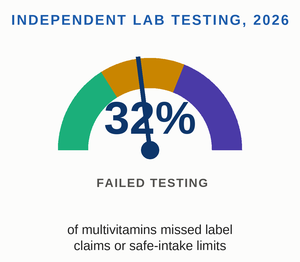
Figure 3. Independent testing in 2026 found real, measurable gaps between what labels claim and what products contain.
The scale of the problem is not hypothetical. In testing published in March 2026, ConsumerLab found that 32 percent of the multivitamin and multimineral products it evaluated, 7 of 22, failed to meet label claims or approached or exceeded established Tolerable Upper Intake Levels, with issues ranging from a product containing just 11.8 percent of its claimed vitamin A to others carrying up to four times the labeled amount of folate or zinc [13]. Every one of those failures would have been caught, and prevented, by rigorous testing against a certified reference standard before the batch left the factory.
For a wholesaler or distributor evaluating a new supplier, three questions do most of the due-diligence work: does the certificate of analysis reference a named, traceable reference standard rather than an internal in-house benchmark; was the testing performed by an ISO/IEC 17025 accredited laboratory; and is testing performed on a batch-specific basis rather than only at initial product qualification. A supplier that can answer all three confidently is one whose quality claims can actually be verified, not just stated.
Frequently Asked Questions
What is a reference standard, in plain terms?
It is a certified material with a known, independently verified composition that a laboratory uses as the confirmed benchmark against which it checks its instruments and test results, similar to how a calibration weight is used to confirm a scale reads correctly.
Are reference standards legally required for dietary supplement manufacturers?
Not as a single named requirement in most jurisdictions, but they are effectively unavoidable. In the US, GMP regulations require manufacturers to verify identity, purity, strength, and composition using scientifically valid methods, which in practice means using an appropriate reference material. In the EU, safety assessments and health claim substantiation similarly depend on defensible, standard-referenced analytical data.
Why does the EU take a stricter approach than the US?
The EU’s framework is built around pre-market safety assessment for new or borderline substances and a closed list of pre-authorized health claims, administered by EFSA, whereas the US relies more heavily on post-market enforcement against manufacturers that fail to meet GMP obligations.
What should a distributor ask a new supplier before signing a contract?
Request a certificate of analysis that names the specific reference standard used, confirm that the testing laboratory holds ISO/IEC 17025 accreditation, and ask whether testing is conducted on every batch or only during initial product qualification.
Sourcing Built on Verifiable Quality
Mevian works with manufacturing partners and laboratories that test against recognized reference standards and accredited methods, not internal benchmarks alone, because a claim on a label is only as strong as the evidence behind it.
For distributors, wholesalers, and pharmacy partners evaluating a new ingredient or supplier relationship, our team is glad to walk through the documentation that should sit behind any product before it reaches your shelf.