Disease-related malnutrition remains a significant challenge in healthcare and is associated with poorer clinical outcomes, including delayed recovery, longer hospital stays and increased complications [1,2].
Yet nutritional requirements differ substantially between patients. Renal disease, impaired glucose metabolism, chronic wounds, cancer, pediatric illness and major surgery each create distinct nutritional demands.
This is the rationale behind Foods for Special Medical Purposes (FSMPs): products specially processed or formulated for the dietary management of patients with a limited, impaired or disturbed capacity to take, digest, absorb, metabolise or excrete ordinary food, or with other medically determined nutrient requirements that cannot be met by modifying the normal diet alone, used under medical supervision [9].
What Legally Defines an FSMP?
The concept of an FSMP is not merely descriptive — it is a defined regulatory category with real consequences for how products are formulated, labeled and used clinically.
In the European Union, FSMPs are governed by Regulation (EU) No 609/2013, Article 2(2)(g), which defines them as food specially formulated for the dietary management of patients, used under medical supervision, for patients whose needs cannot be met by modifying the normal diet alone [9]. In the United States, the closest equivalent category is the medical food, defined under the Orphan Drug Act as a food formulated to be consumed or administered enterally under the supervision of a physician and intended for the specific dietary management of a disease or condition with distinctive, medically established nutritional requirements [10].
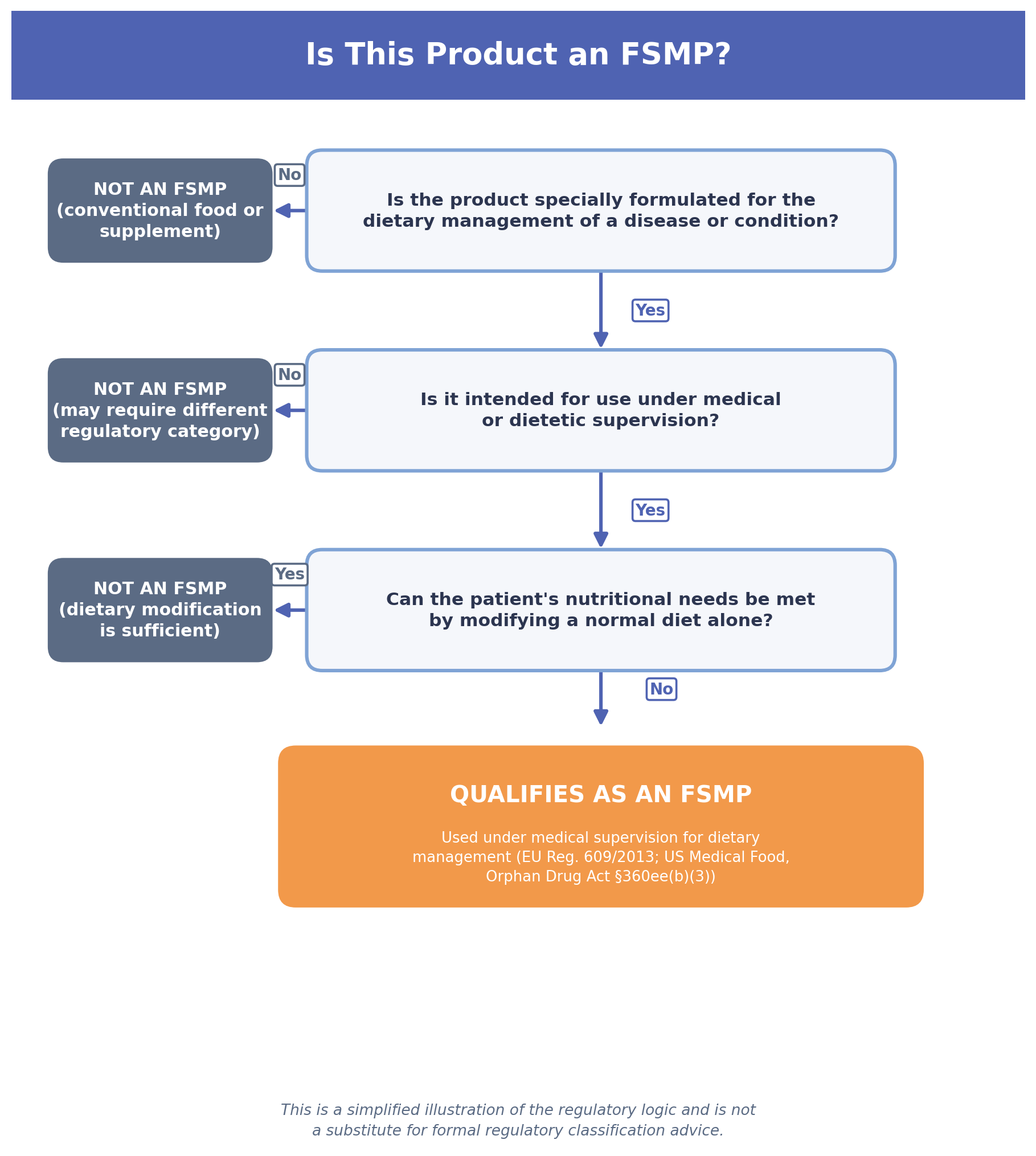
Figure 1. Simplified decision logic for classifying a product as an FSMP, based on EU and US regulatory definitions [9,10].
This regulatory framing carries clinical weight: FSMPs are not intended to replace a varied diet in healthy individuals, and their appropriate use depends on an accurate underlying diagnosis of nutritional risk or nutritional need.
Screening First: Identifying Nutritional Risk
Appropriate use of clinical nutrition, including FSMPs, begins with identifying which patients are nutritionally at risk. Nutritional screening can help identify patients at risk and support timely intervention [3].
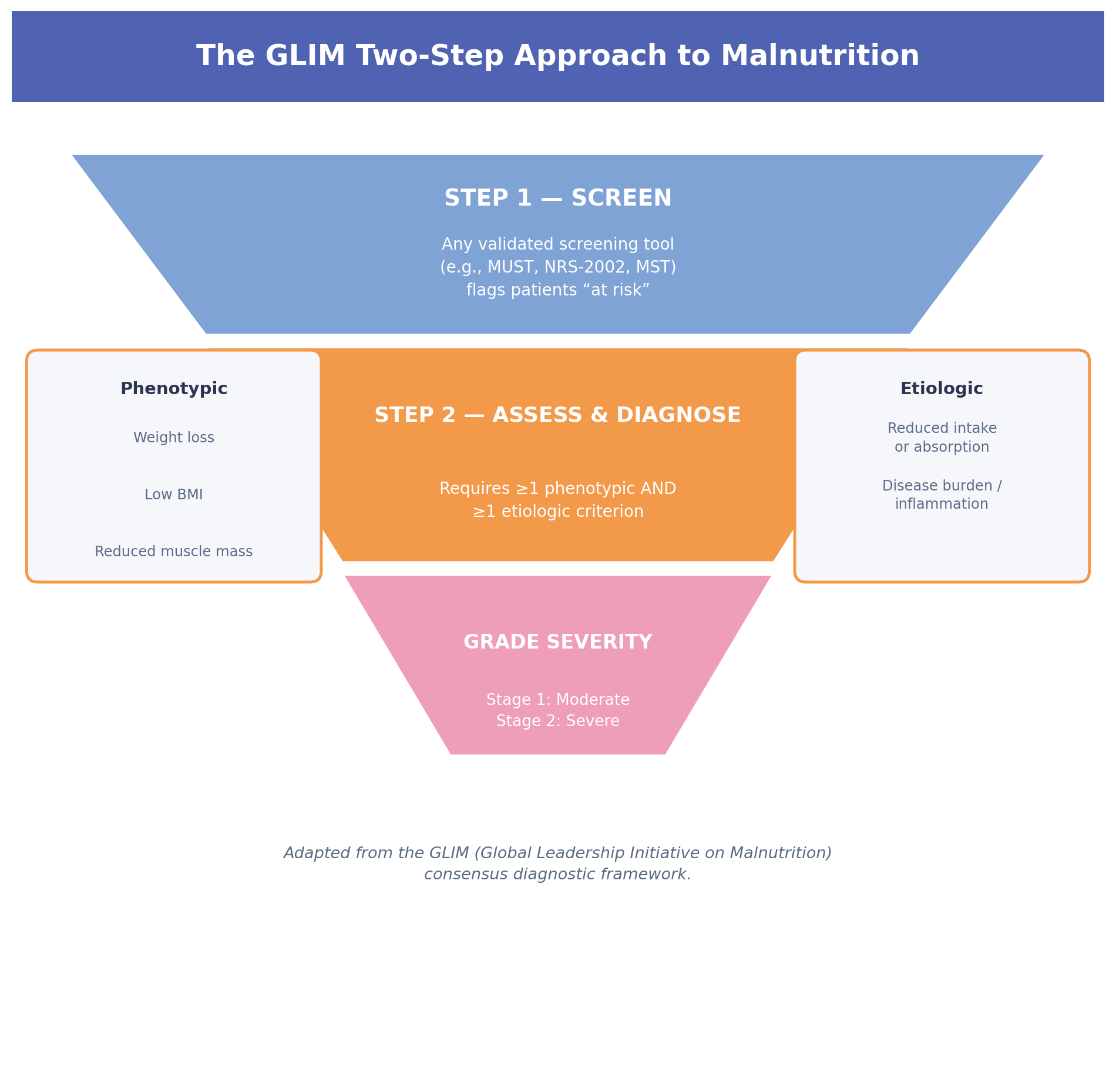
The Global Leadership Initiative on Malnutrition (GLIM) consensus framework formalizes this into a two-step process: an initial screening step using any validated tool — such as the Malnutrition Universal Screening Tool (MUST) or Nutritional Risk Screening 2002 (NRS-2002) — followed by a diagnostic step requiring at least one phenotypic criterion (weight loss, low body mass index, or reduced muscle mass) together with at least one etiologic criterion (reduced food intake or absorption, or disease burden and inflammation). Diagnosed cases are then graded as Stage 1 (moderate) or Stage 2 (severe) malnutrition [11].
Large hospital-based studies applying GLIM and related criteria have found that a substantial proportion of admitted patients meet criteria for malnutrition risk, underscoring the value of routine, structured screening rather than clinical impression alone [3,8].
Different Conditions, Different Nutritional Needs
Nutritional requirements vary considerably by underlying condition. The table below summarizes representative nutritional challenges and clinical nutrition considerations across common patient groups; specific FSMP selection should always be individualized to the patient [2,4–7].
Condition | Nutritional Challenge | Clinical Nutrition Considerations |
Renal Nutrition | Altered protein, electrolyte and fluid handling that varies by CKD stage | Energy, protein, electrolyte (e.g., potassium, phosphate) and fluid intake managed according to disease stage and nutritional status [4]. |
Glycemic Management | Impaired glucose metabolism affecting carbohydrate tolerance | Nutritional strategies built around controlled carbohydrate delivery and individualized metabolic targets. |
Wound Care | Increased energy and protein demand for tissue repair | Adequate protein and energy intake; nutrients including vitamin C and zinc contribute to normal tissue physiology; malnutrition can impair healing [2]. |
Oncology Nutrition | Reduced intake, weight loss and skeletal muscle loss from disease or treatment | Maintain adequate energy and protein intake to support nutritional status and treatment tolerance. |
Pediatric Nutrition | Requirements for growth and development, not maintenance alone | Plans account for age, growth trajectory and condition-specific nutritional requirements. |
Perioperative Nutrition | Poor preoperative nutritional status raises postoperative complication risk | Nutritional screening and intervention before and after surgery within ERAS pathways [5,6]. |
Individualization Is Essential
Specialized nutrition should be selected according to the patient’s condition, nutritional status, and stage of treatment.
The fundamental principles remain consistent: identify nutritional risk early, match nutritional intervention to the patient’s physiological requirements, monitor response, and adapt the nutritional strategy as clinical circumstances change [8].
Key Clinical Takeaways
Different conditions require different nutritional strategies. There is no universal approach to disease-related nutritional needs.
FSMPs have a defined legal role in clinical nutrition. Under EU and US regulatory frameworks alike, they are intended for the dietary management of patients under medical supervision, not as a substitute for a normal diet [9,10].
Structured screening and diagnosis improve consistency. Frameworks such as GLIM combine phenotypic and etiologic criteria to identify and grade malnutrition in a reproducible way [11].
Early nutritional assessment matters. Identifying nutritional risk can support timely and appropriate intervention [3].
Clinical nutrition should be individualized and monitored. The objective extends beyond providing additional calories to addressing the patient’s specific nutritional requirements within their broader clinical management [8].