For patients whose illness limits how much they can eat, absorb, or metabolize, filling that gap safely requires a category of product most healthcare professionals recognize by name but few can define with precision.
That category is Foods for Special Medical Purposes, or FSMPs. The term sits at an uneasy intersection of food law and medicine, confused often enough with food supplements on one side and prescription-only medical treatments on the other. Getting the distinction right matters for formulators, distributors, pharmacy partners, and the clinicians who decide when a patient needs one. This guide sets out what an FSMP actually is, how it is regulated, where the evidence shows it changes outcomes, and where its use properly ends.
NOT A SUPPLEMENT, NOT A MEDICINE
Not a food supplement: an FSMP is not a top-up for an already-adequate diet. It exists specifically because normal food, fortified food, or a supplement cannot meet a diagnosed patient’s needs.
Not a medicinal product: an FSMP does not treat or cure disease through pharmacological action, and by law it cannot carry health or nutrition claims on its label. [2]
It is: a specially formulated food for the dietary management of a diagnosed disease, disorder, or medical condition, intended for use under medical supervision. [1]
Where FSMPs Sit: Four Categories, Four Regulatory Frameworks
European food law does not treat all nutrition products the same way, and the differences are not cosmetic. Standard food, fortified or functional food, and food supplements are all governed by general food legislation and are available to anyone. Medicinal products sit at the opposite end, requiring a marketing authorization and permitted to claim they treat or prevent disease. FSMPs occupy a distinct, narrower space between the two, defined in EU law under Regulation (EU) No 609/2013 and given detailed compositional and labelling rules by Commission Delegated Regulation (EU) 2016/128. [1][2]
The European Commission’s own 2017 guidance on classifying FSMPs is explicit that the boundary runs in both directions. A product cannot be marketed as an FSMP if a patient’s needs could instead be met by modifying the normal diet, using a food supplement, or choosing a fortified food, that route counts as “modification of the normal diet” under the law. And a product cannot be marketed as an FSMP if an averagely informed consumer would understand it as treating or preventing a disease, at that point it has crossed into medicinal-product territory regardless of how it is described. [2]
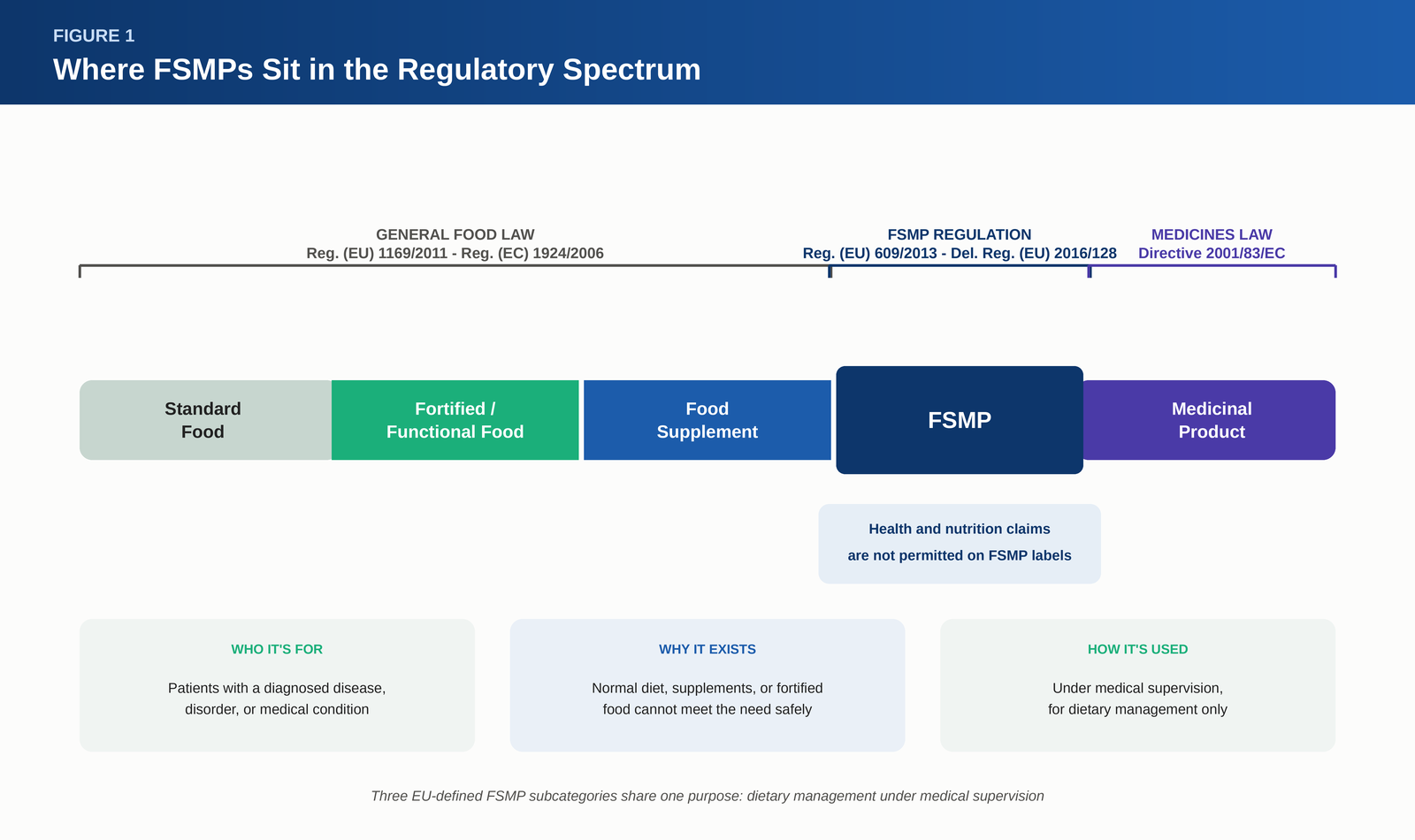
Figure 1. FSMPs occupy a distinct regulatory space between food law and medicines law, with no health or nutrition claims permitted.
.
| Food Supplement | FSMP | Medicinal Product |
Legal basis | General food law (Reg. 1169/2011, Reg. 1924/2006) | Reg. (EU) 609/2013 and Del. Reg. (EU) 2016/128 | Directive 2001/83/EC (medicines) |
Intended for | The general population, including healthy people | Patients with a diagnosed disease, disorder, or medical condition | Patients being treated for a specific illness |
Health or nutrition claims | Permitted, subject to EFSA-approved claims | Not permitted on the label | Therapeutic claims are the product’s purpose |
Medical supervision | Not required | Required, stated on every label | Typically prescribed or dispensed |
Three Kinds of FSMP, One Legal Definition
Every FSMP shares the same legal definition, but the regulation splits the category into three practical types, distinguished by how complete the nutrition is and whether it targets a specific condition. [2]
- Nutritionally complete, standard formulation: a balanced formula that can serve as a patient’s sole source of nutrition or as a supplement to oral intake, without targeting a single disease. Mevian’s Nutromev Complete, a ready-to-drink formula delivering 252 kcal and 15g protein per 65g bottle, is an example built for general disease-related nutritional risk rather than one specific organ system.
- Nutritionally complete, disease-specific (adapted) formulation: a balanced formula re-engineered around the metabolic restrictions of one condition. Nutromev Renal illustrates the type: 400 kcal and 6.0g protein per 85g bottle, with sodium, potassium, and phosphorus deliberately controlled for patients managing chronic kidney disease, a use case examined in Mevian’s dedicated guide to kidney disease.
- Nutritionally incomplete formulation: a targeted formula, sometimes a single macronutrient or micronutrient module, that is explicitly not suitable as a sole source of nutrition and is used to supplement an existing diet or feeding plan.
All three carry the same mandatory label statement: the product must be used under medical supervision. That single line is what separates every FSMP, regardless of category, from a supplement a patient could reasonably choose for themselves. [1]
Why “Just Eat More” Doesn’t Work: The Disease-Related Malnutrition Burden
The clinical case for FSMPs starts with how common, and how under-treated, disease-related malnutrition actually is. The WHO European Region estimate of 30 to 50 percent of hospitalized patients affected is not a niche figure. Roughly 40 percent of inpatients in the region experience unintentional weight loss during their stay, and close to half of patients who are not eating adequately receive no formal nutritional care at all, only about a third of patients unable to eat normally are given supplements or artificial nutrition. [1]
The consequences compound quickly. Malnutrition weakens the ability to fight infection, slows wound healing and recovery, extends hospital stays, and raises mortality risk, effects that are especially pronounced in older adults and people living with cancer, kidney disease, or other chronic conditions. [1] In oncology specifically, ESPEN’s practical guideline on clinical nutrition in cancer notes that up to 10 to 20 percent of cancer patients die from the consequences of malnutrition itself, not the tumor, and that weight stabilization in gastrointestinal and lung cancer is associated with meaningfully better survival. [6]
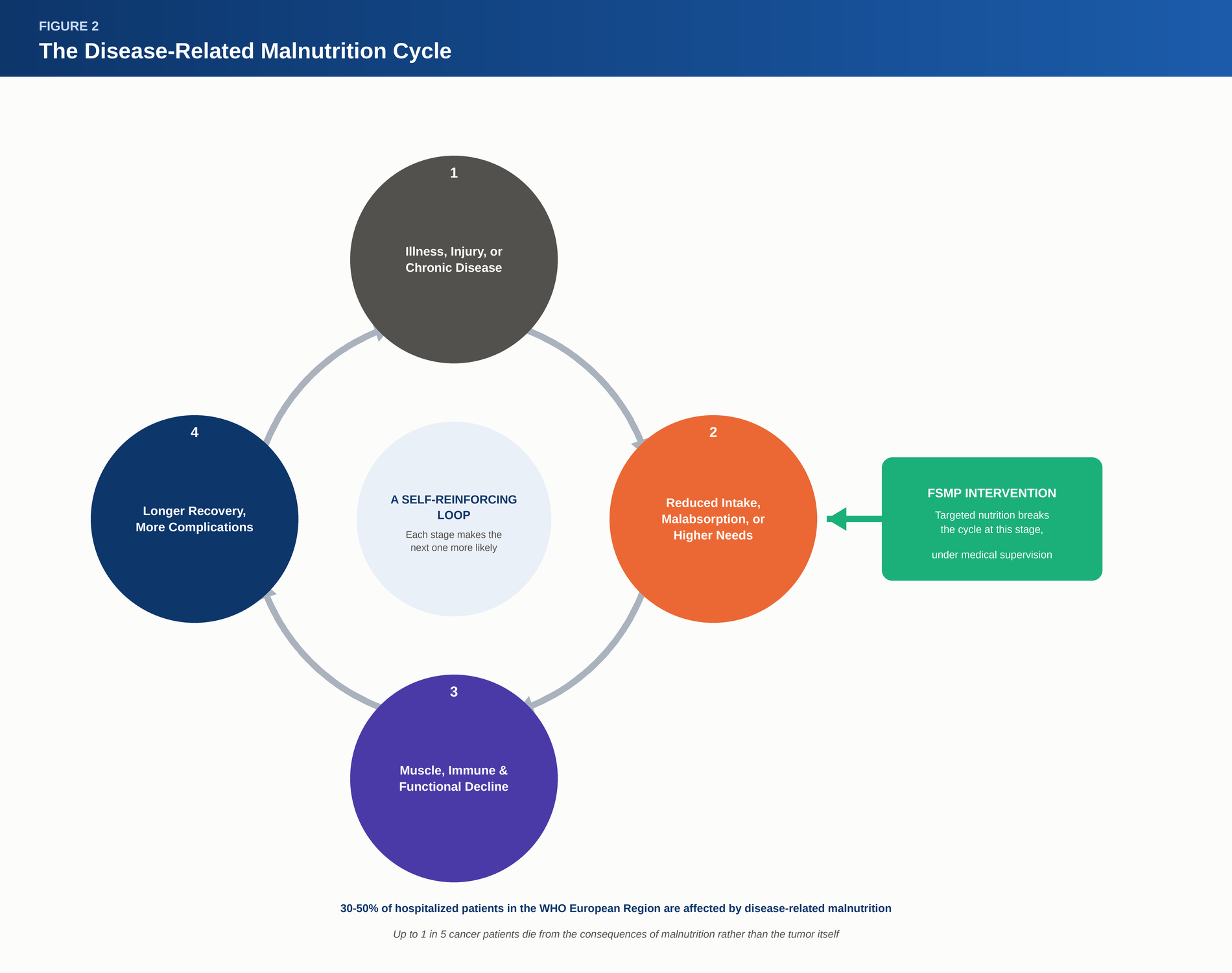
Figure 2. Disease-related malnutrition is self-reinforcing; targeted nutrition support is designed to interrupt it early.
Where FSMPs Make a Clinical Difference
The value of an FSMP is easiest to see in conditions where ordinary food genuinely cannot do the job, either because the disease changes what the body can process, or because a specific dietary pattern is itself the therapy.
- Chronic kidney disease: renal-adapted formulas with controlled protein, sodium, potassium, and phosphorus support patients through stages where general dietary counseling alone struggles to hit precise nutrient targets, as explored in Mevian’s guide to kidney disease and nutrition.
- Cancer and cachexia: oral nutritional supplementation is recommended by ESPEN as a first-line step once dietary counseling and symptom management stop being sufficient, specifically to help patients complete radiotherapy and other treatment courses without interruption. [6]
- Drug-resistant epilepsy: ketogenic dietary therapy, delivered through specially formulated medical foods, is an established option once medication fails. A 2025 systematic review pooling nine pediatric trials (786 children) found ketogenic diet therapy roughly quadrupled the likelihood of at least a 50 percent reduction in seizure frequency compared with usual care (relative risk 4.06), with an even larger relative effect across five adult and adolescent trials (relative risk 7.73). [7] Mevian’s guide to pediatric epilepsy covers how this therapy fits into a broader treatment pathway.
- Inborn errors of metabolism: conditions such as phenylketonuria (PKU), affecting an estimated 450,000 people worldwide at a global incidence of roughly 1 in 10,000 to 24,000 births, cannot be managed on ordinary protein-containing foods at all. A phenylalanine-free amino acid medical formula supplies the protein and energy a standard diet cannot safely provide, keeping blood phenylalanine within the narrow 120 to 360 micromole per litre range needed to protect neurological development. [8]
- Dysphagia: swallowing difficulty affects a pooled 42 percent of patients after acute stroke, according to a 2024 meta-analysis of 58 studies covering more than 37,000 patients, with older age, hypertension, diabetes, and atrial fibrillation as significant risk factors. [10] Texture-modified foods and thickened liquids, standardized globally through the eight-level International Dysphagia Diet Standardisation Initiative (IDDSI) framework, reduce aspiration risk in a population where ordinary food and drink can be genuinely unsafe. [9]
Frequently Asked Questions
Is an FSMP the same thing as a food supplement?
No. A food supplement is intended for the general population and can carry approved health claims. An FSMP is legally defined as being for patients with a diagnosed disease, disorder, or medical condition whose needs cannot be met by a supplement or a modified diet, and it cannot carry health or nutrition claims at all. [1][2]
Can a healthy person use an FSMP for general wellness?
That falls outside the product’s intended use. FSMPs are formulated and labelled for the dietary management of a specific medical condition under medical supervision, not for general nutritional support in someone without that condition.
Does an FSMP require a doctor’s prescription?
Not necessarily a prescription in the pharmaceutical sense, but every FSMP must be labelled for use under medical supervision, and appropriate use depends on a clinician identifying the patient’s specific nutritional needs first.
How does this compare with the US “medical food” category?
The concepts are closely related but not identical. Under the Orphan Drug Act, the FDA defines a medical food as one formulated for enteral use under physician supervision, for the dietary management of a disease with distinctive nutritional requirements established by medical evaluation, and it applies the concept more narrowly, largely to conditions like inborn errors of metabolism where diet modification alone cannot work. Conditions manageable through ordinary dietary changes, including pregnancy, diabetes, or common nutrient deficiencies, do not qualify in either system. [3]
A Growing, Increasingly Global Category
The global medical foods market was valued at approximately USD 26.1 billion in 2025 and is projected to reach USD 38.9 billion by 2033, a 6.0 percent compound annual growth rate. [4] Cancer-related applications already hold the largest single share of that market, at 12.2 percent in 2025, while cachexia-specific formulations are forecast to grow fastest of any application segment, a reflection of how central oncology nutrition has become to cancer care overall. [4]
North America currently holds the largest regional share, at 32.5 percent, but Asia Pacific is expected to grow fastest over the forecast period, a shift that tracks the same distribution and market-access dynamics Mevian navigates across its international partner network. Powder formulations still dominate by format, though liquid, ready-to-drink formats, of the kind Nutromev Complete and Nutromev Renal are built on, are growing faster, and oral administration remains the leading route even as enteral (tube-fed) use expands. [4]
Where the Boundary Sits: When an FSMP Is Not the Right Answer
- A healthy individual seeking general wellness support. FSMPs are defined by a diagnosed medical need, not a lifestyle preference.
- A condition that can be safely and adequately managed by modifying the normal diet, adding a food supplement, or choosing a fortified food. Regulators in both the EU and US explicitly exclude these cases, pregnancy and diabetes are the FDA’s own examples of conditions that do not qualify as medical foods. [3]
- Any use presented as treating, curing, or preventing disease. That presentation reclassifies a product as medicinal, with an entirely different regulatory pathway and evidentiary bar. [2]
- Long-term use with no medical review. Every FSMP label requires medical supervision precisely because nutrient needs, and the appropriateness of the product itself, can change as a patient’s condition evolves.
What Each Stakeholder Should Know
Stakeholder | Key Focus |
Distributor / wholesaler | Confirm FSMP classification and category (standard, disease-specific, or incomplete) before market entry, since compositional and labelling rules differ by destination market and category. |
Pharmacy partner | Stock decisions should reflect that FSMPs cannot be recommended the way a general supplement can, counsel patients to confirm use with their prescribing clinician. |
Healthcare professional | Match the FSMP category to the specific deficit, whether that is total nutritional replacement, disease-adapted composition, or a single-nutrient module, and reassess as the patient’s condition changes. |
Patient or caregiver | An FSMP is part of a medically supervised plan, not a self-selected wellness product, questions about dose, duration, or switching products belong with the prescribing clinician. |
Formulating and Distributing Evidence-Backed FSMPs
Mevian’s Nutromev range, spanning complete, renal, wound-care, and pediatric formulations, is built around the same principle this guide has walked through: precise regulatory classification paired with a formulation that actually matches the clinical deficit it targets. For distributors and pharmacy partners bringing FSMPs into new markets, or healthcare professionals evaluating which category fits a patient’s needs, that precision is not a compliance detail, it is the entire value proposition.
A correctly classified FSMP is not a stronger supplement. It is a different category of product entirely, and treating it that way is what keeps patients safe and partners compliant.